
 United States
 Hong Kong
Is HKSI Paper 1 open book? No - and that changes how you should study
No. HKSI Paper 1 is closed book. You cannot bring the Securities and Futures Ordinance, the SFC codes, the study manual or your own notes into the examination room. Sixty questions, 90 minutes, everything from memory, with a 70% pass mark of 42 of 60.
The question gets asked constantly, and usually with a note of hope in it. The answer is no. Closed book, on a computer, with nothing on the desk but what the centre gives you. That single fact should reshape your entire study plan, and for most candidates it does not, which is a large part of why roughly 48.1% of them do not pass.
The rule, plainly
- Open or closed book
- Closed book
- Ordinance text at the desk
- No
- SFC codes at the desk
- No
- Study manual or notes
- No
- Phone, smartwatch, tablet
- No
- Questions
- 60 multiple choice in 90 minutes
- Pass mark
- 70% - 42 of 60
- Delivery
- Computer-based at an HKSI Institute examination centre
For what is and is not permitted as a physical item, including the calculator question, see what you can bring into the exam. This page is about the consequence rather than the inventory.
Why the exam is closed book
Because of what it is for. Paper 1 exists so the SFC can be satisfied that a person carrying on a regulated activity knows the regulatory framework they are operating inside. A compliance officer who has to look up whether a particular code applies to their business is a compliance officer who will miss the moment it matters. The exam is testing whether the framework is in your head, not whether you can use an index.
Open-book professional exams tend to test application: here is a fact pattern, work it through with the materials. Paper 1 tests coverage and precision across a wide surface. Nine topics, sixty-six second-level syllabus headings, sixty questions. Given a book, most candidates would clear 70% and the exam would tell the regulator nothing.
What closed book does to your study method
Here is the practical failure. Reading builds recognition. Closed book requires recall. They feel identical while you are studying and they are completely different in the exam room.
| Study activity | What it builds | Value for a closed-book paper |
|---|---|---|
| Reading the manual | Recognition | Low after the first pass |
| Highlighting | A sense of progress | Close to none |
| Re-reading a chapter you found hard | Familiarity | Low. It feels like learning |
| Writing a summary from memory | Recall | High |
| Answering questions with the book shut | Recall under retrieval pressure | Highest |
| Timed full-length mocks | Recall plus pacing | Highest, and it also removes exam-day nerves |
The opinion, and I will state it without hedging: for a closed-book paper, re-reading is the lowest-value study activity available and it is the one candidates spend the most hours on. It feels productive because the material gets easier every pass. What is getting easier is your recognition of the page, not your ability to produce the rule from nothing when a question phrases it differently.
The specific thing you have to be able to do
Not "understand the Ordinance". Something narrower. You need to be able to answer, cold, questions of this shape: which body has this power, which code governs this business, which Part of the Ordinance deals with this subject, which category of person does this requirement bind.
- Which regulator supervises which type of institution, and where the boundaries sit
- Which SFC code applies to fund managers, corporate finance advisers, credit rating providers and share registrars
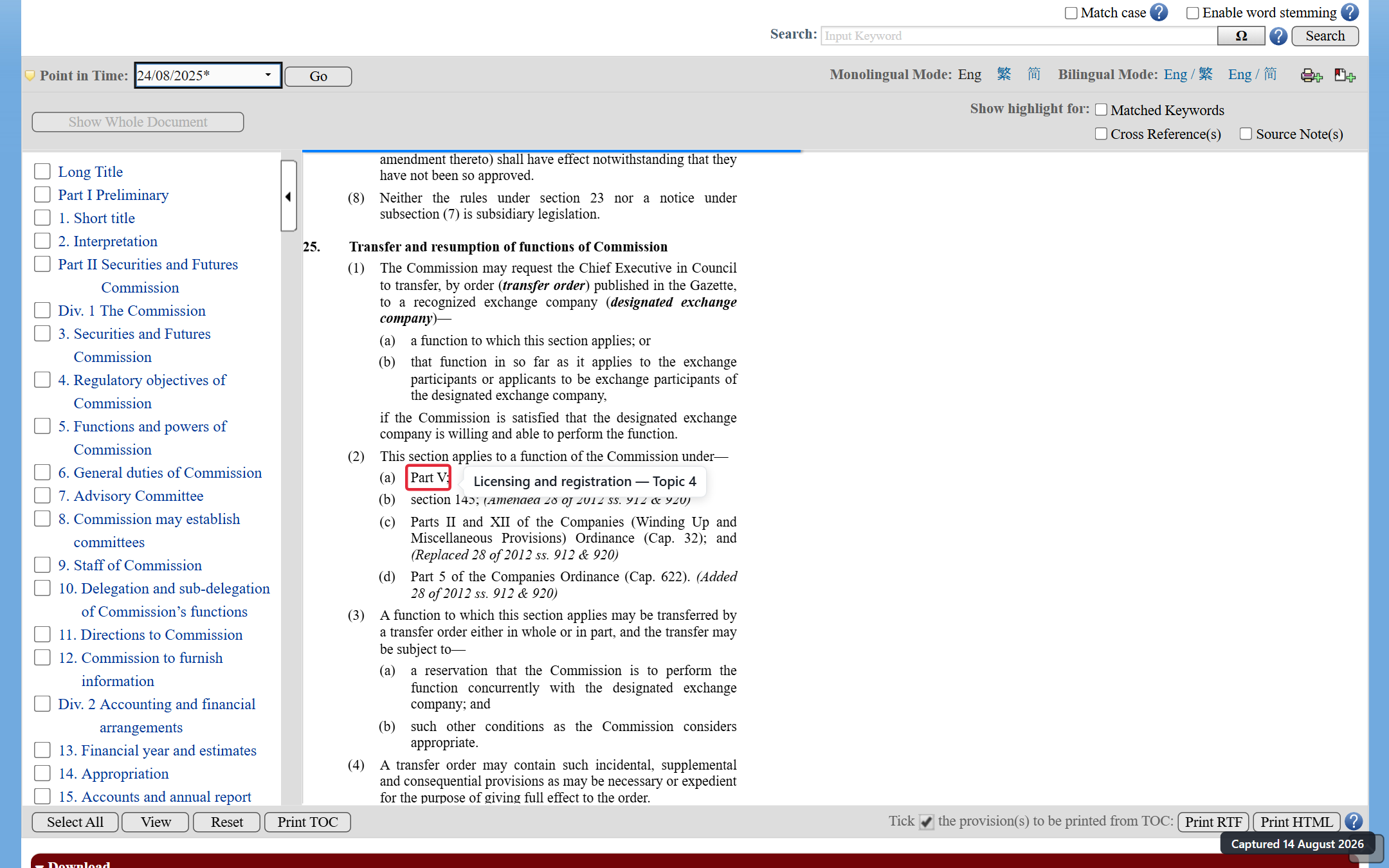
- Which Part of the Ordinance covers licensing, which covers business conduct, which covers market misconduct
- What the client asset and client money requirements attach to
- What counts as a regulated activity, and what does not
Every one of those is a lookup in real life and a memory item in the exam. That is the gap closed book creates.
Close everything. On a blank page, write out the nine syllabus topics in order, then list what sits under each. If you cannot get past four topics, you are not ready, however many hours of reading you have logged. Repeat it weekly and watch the page fill up.
Does closed book make it harder than it sounds?
It makes it different rather than brutal, and here is the concession. Closed book is far less punishing on a multiple-choice paper than it would be on a written one, because the options do half the retrieval for you. You are not producing the name of the relevant code from a blank mind. You are recognising it in a short list, one entry of which is right.
That is genuinely forgiving, and it is why elimination technique is worth practicing. A couple of the options are usually disposable on sight. The exam lives in the last two, and those are the ones where half-remembered material fails you.
How to use the two months before your sitting
Front-load the reading and back-load the retrieval. Get through the syllabus once, quickly, to build the map. Then spend the majority of your remaining time on questions with the book shut, going back to the source only for the things you got wrong. Our practice questions are built for that second phase, and the study plan sequences the two.
One last thing worth knowing: because the paper is closed book, the study manual is a convenience rather than a necessity. Whether it is worth buying is a separate question, and we take a position on it in do you need the HKSI study manual.
Common questions
Is HKSI Paper 1 open book or closed book?
Closed book. Nothing you own goes to the desk with you: not the Securities and Futures Ordinance, not the SFC codes, not the HKSI study manual, and not your own notes. Sixty questions in 90 minutes, entirely from memory, at a 70% pass mark.
Can I bring a copy of the Ordinance into the exam?
No. The Ordinance is freely available on Hong Kong e-Legislation while you study, and it is not available to you during the examination. That is deliberate: the paper tests whether the framework is in your head, not whether you can search a document.
Can I take notes into the HKSI exam?
No. Personal notes, summaries, mind maps and flashcards all stay outside the examination room with the rest of your belongings. Anything you need at the desk is supplied by the centre under its own procedures.
Why is Paper 1 closed book when compliance work is not?
Because the licence is about judgement in the moment. A licensed person who does not recognise that a rule is engaged never gets as far as looking it up. The exam checks the recognition, and real work supplies the reference materials.
Does closed book make Paper 1 much harder?
Harder than an open-book version, but less than you would fear. The questions are multiple choice, so the listed options carry part of the retrieval load. Recognition among options is easier than production from a blank page, which is why elimination technique is worth practicing.